
The final edit, not just the filming day, shapes what a video production quote covers. It sets out the planned work across pre-production, production and post-production, while the scope and deliverables influence editing time and total cost. Understanding a video production quote means looking beyond the headline figure to the number of films, versions, durations and formats included.
It’s reasonable to want a clear view of what you’re paying for before a project begins. A detailed scope shows how choices such as social cutdowns, platform-specific formats and additional review rounds can affect the edit.
This guide explains what a quote can include, how deliverables shape editing time and how to estimate editing costs from the hours involved and the editor’s rate. It also covers the details that define the scope, helping you compare the proposed work with the result you need.
Key Takeaways
- List each film, cutdown, duration and destination platform to make the editing scope clearer.
- Read a quote as a plan for pre-production, filming and post-production, not simply a filming-day charge.
- Estimate editing cost by multiplying the expected hours by the editor’s hourly rate, allowing for footage management and finishing.
- Agree the deliverables, review rounds, milestones and payment terms before work begins, then discuss any scope changes.
1. Choosing video deliverables and cutdown versions
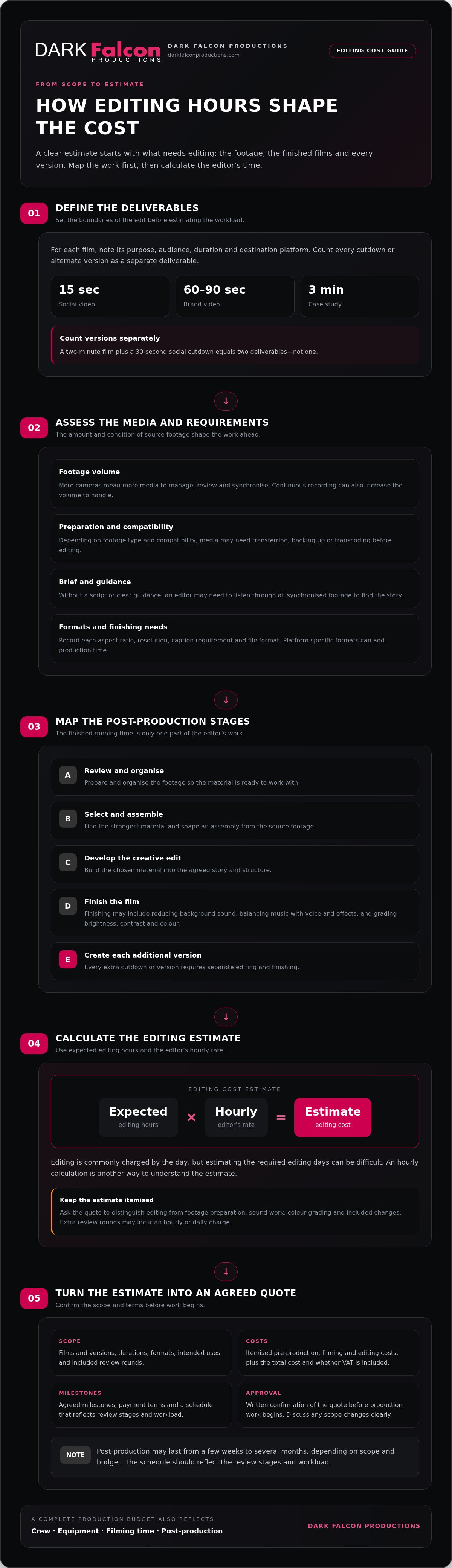
Start with a deliverables list before estimating filming or editing. Specify each film’s purpose, duration, audience and destination platform. For example, a brief might request a 15-second social video, a 60-90-second brand video or a 3-minute case study. These targets help define the filming approach and the edit’s structure.
Count versions separately. A two-minute film with a 30-second social cutdown is two deliverables, not one. Add the required aspect ratio, resolution, captions and file format for each platform. Platform affects how the crew frames shots, how the editor formats footage and which music licences may be needed. Multiple formats for multiple platforms add production time.
Ask for pre-production, filming and editing costs to be itemised. Planning, crew and camera requirements, filming days, footage organisation, the creative edit, finishing and each cutdown can appear as distinct tasks. This makes it easier to see how changing a deliverable affects the work.
Give final delivery its own scope. Specify the number of films and versions, their durations, file formats and intended uses. Cinema-release films may need a Digital Cinema Package (DCP), while programmes for network television or international broadcast must follow the DPP process and technical standards. Include review rounds and the changes covered, so there is a clear basis for any additional editing work.
Media handling also affects post-production. Depending on the footage type and compatibility, it may need transferring, backing up and transcoding before editing. Camera formats and codecs should suit the editing workflow, while continuous recording or multiple cameras can increase the volume of media to manage. For UK VAT and payment terms, check whether the quoted total includes VAT and how payments are scheduled. The quote should state the agreed milestones, payment terms and total cost before work starts.
2. What is a video production quote?
A video production quote sets out the agreed work, deliverables, total cost and payment terms. It follows agreement on the project scope and milestones, and the producer should receive written confirmation before work begins. An earlier estimate can help shape the scope, crew and editing complexity before the formal quote.
Budget planning starts with the intended outcome. A scripted interview with one speaker differs from a creative campaign involving actors, locations and several scenes. Each choice affects preparation, filming needs and post-production. Share your target budget and priorities early; this helps shape a proposal around the available spend rather than an imagined production.
Compare proposals by matching their scope, not just their totals. Check the number of filming days, crew and camera needs, deliverables, editing work, review rounds and payment milestones. Contacting five production companies may produce a range of quote amounts. A lower figure may cover fewer services, whilst a higher one may include additional production elements. Ask what each proposal allocates to the agreed work.
The quote should clarify usage rights and licensing, since intended use can affect the permissions and music licences required. State where the video will appear, its audience and planned platforms. Music licensing requirements can vary by platform. Record the agreed usage and licensing arrangements alongside the deliverables.
Quotes may offer options at different price points, helping you weigh production choices against your budget. For example, compare a single interview film with a version that adds actors, multiple locations or extra edits. Identify your priorities, then agree any revised scope and milestones before approving the quote.
A concise creative brief can make these decisions easier to discuss. Shape a clear production brief around your objectives, audience, budget and intended deliverables.
3. Estimating total editing hours and cost
In the UK, estimate editing cost by multiplying the editor’s expected hours by their hourly rate. Total production cost also reflects the crew, equipment, filming time and post-production required. The price depends on the project and is provided after a quote request; scope, footage volume, deliverables and editing complexity all shape it.
Post-production involves more than assembling shots. An editor reviews and organises footage, selects the strongest material for an assembly, then develops the creative edit. Finishing may include reducing background sound, balancing music with voice and effects, and grading brightness, contrast and colour. Each stage adds work beyond the final running time.
Estimate the workload from the source material and brief. More cameras mean more media to manage, review and synchronise. In multi-camera event cinematography, such as the extensive celebrations captured by Shutterink Photography, managing and cataloguing dozens of hours of spontaneous footage directly influences editing time. Short-form content without a script or clear guidance can still take time, because the editor may need to listen through all synchronised footage to find the story. Each additional version also requires separate editing and finishing.
Video editing is commonly charged by the day, although estimating the required editing days can be difficult. An hourly calculation offers another way to understand the estimate: multiply projected editing hours by the editor’s hourly rate. Ask the quote to distinguish editing from footage preparation, sound work, colour grading and included changes. Extra review rounds may incur an hourly or daily charge.
An estimate helps assess a project before a formal quote is prepared. Once the scope and milestones are agreed, the quote should set out deliverables, total costs and payment terms. The producer should receive written approval before work begins. Post-production may last from a few weeks to several months, depending on scope and budget, so the schedule should reflect review stages and workload.
4. What a video production quote is
A video production quote is a project-specific outline of the work, deliverables, costs and payment terms. It brings pre-production, filming and post-production together within an agreed scope. Understanding a video production quote also means seeing how planning, crew, footage and editing contribute to the finished films, rather than treating filming as the whole project.
A UK quote should identify what the project will produce and how the work will be completed. It may itemise creative planning, cameras, assistants, lighting, studio hire, make-up artists and the days each resource is needed. For post-production, it can describe footage review, editing, sound, colour grading and delivery. These details connect the proposed total to the intended result.
The quote follows agreement on the scope and delivery milestones. An estimate can first help establish likely duration, crew size and editing complexity. A detailed brief and reference video provide useful direction. For example, a scripted interview requires a different approach from a film involving multiple locations and contributors.
Read the quote as a production plan as well as a cost breakdown. Check that it identifies the films and versions, durations, platforms, review rounds and delivery formats. It should also state the total cost and payment terms. Get written confirmation in place before work starts.
Understanding a video production quote means recognising how a change in scope can affect the plan. Adding a filming day, another version or a new delivery requirement may alter the work and total cost. Discuss changes before they proceed, then agree the revised scope and cost to keep deliverables, milestones and budget aligned.
The clearest quote links each production decision to a defined output. Discuss your video production brief to shape a scope around the footage, edit and final deliverables you need.
Dark Falcon Productions: Creative
Dark Falcon Productions brings creative direction to video projects with a clear purpose and defined deliverables. Its video production and editing services support the work from shaping the idea through to finishing the film. For concise messages designed to capture audience attention, Shorts can suit the brief. Social media management can also support organisations planning their social presence.
Turn to Dark Falcon Productions when you’re ready to turn a project brief into a considered production plan. Share your intended audience, key message, preferred formats and reference material to give the project a focused starting point. These details help define what the finished work needs to achieve and how its deliverables can serve that goal.
Visit darkfalconproductions.com to discuss your video project.
Shape your next production with purpose
Understanding a video production quote gives you a stronger starting point. The next decision is creative: what should your audience think, feel or do after watching? Set that intention before refining the brief. It can guide the story, tone and role of each deliverable.
Dark Falcon Productions can help bring that direction into focus through Creatives, Shorts and social media management. These offerings can support a project built around a central film, concise social content or a wider publishing plan. The right approach starts with your message and the people you need to reach.
Bring your objectives and early ideas to the conversation. Contact Dark Falcon Productions today to take the next step towards a video project with a clear creative direction.
Frequently Asked Questions
What is a video production quote?
A video production quote is a written proposal that sets out the planned work and cost for a specific project. Use it to see what the agreed budget is intended to cover, rather than treating it as a general rate card. Before approving a change to your brief, check how it would affect the work, deliverables or total.
Deal or No Deal: Can I get the number a bit lower?
To explore a lower total, adjust the scope rather than asking for the same work at a reduced charge. For instance, decide whether a secondary cut is essential or whether the concept can work in one location instead of several. Ask for the revised proposal to show what changes, so you can weigh the saving against the creative impact.
Extra Fees: Why am I being charged this?
An extra charge may arise when a request adds work beyond the agreed scope. A new cut, replacement footage after filming or an additional edit beyond the included feedback may require more time. Compare the charge with the change requested, then agree what work it covers before it proceeds. This gives both sides a clear record of the revised task.
Hmmmm… What else should I consider?
Consider who will make decisions and how quickly your team can provide feedback. If several stakeholders need to approve the film, collect their comments into one clear response instead of sending conflicting edits. Plan access to interview participants and filming locations, too. Delays in these practical arrangements can affect the production schedule, even when the creative brief is ready.
Streamlining Part 1: Do I need all of these people for filming my video?
The crew should match the filming plan, not a fixed template. A straightforward interview in one controlled space has different demands from a shoot with multiple cameras, moving subjects and complex lighting. Each crew role supports a production need, such as capturing sound or managing camera work. For live event filming, production teams often coordinate with technical staging specialists like LivewireAV to manage on-site audio, video and lighting setups directly. Review the proposed setup and identify the requirements behind each role.
Streamlining Part 2: How else can I bring this number down?
Reduce avoidable work before filming begins. Finalise the script, interview prompts and key messages so the editor has a clear story to build. Where practical, group contributors in one location and gather colleagues’ feedback before sending it. A focused brief and consolidated notes can limit rework, while a carefully chosen set of deliverables keeps production aligned with your priorities.