
Fast turnaround video editing UK businesses need is about more than finishing a cut quickly. It means shaping footage into polished video, with short-form edits and social teasers prepared for the right channels. The cost depends on the project scope, including footage, versions, graphics and feedback.
Planning fast turnaround video editing UK production teams can use effectively starts with a clear timeline and approval process. This guide explains what affects corporate editing schedules, how cloud-based feedback can keep decisions moving, and where short-form edits fit. You’ll also learn what information helps define the scope and cost, making the next step clearer.
Key Takeaways
- Define the footage, deliverables and versions to make the project scope and quote clearer.
- Plan corporate editing timelines around footage volume, graphics, versions and the pace of feedback.
- Use a shared cloud workflow to keep footage, comments and review decisions organised.
- Shape short-form edits around the audience and platform, rather than treating them as simple cut-downs.
Video editing services for agencies, brands and production companies
For urgent projects, a clear brief helps turn footage into branded content with fewer avoidable review rounds. UK teams can collaborate remotely, so an organised workflow matters more than the editor’s location.
Agency and freelance editing options
A freelance editor may offer a direct route for a defined cut, while an agency may coordinate several production roles or deliverables. For urgent projects, compare how the workflow handles footage, versions, graphics and approvals, not just the initial edit. A rapid service can include selecting takes, assembling a cut, adding agreed branding and preparing exports. If a campaign needs separate versions, agree on formats and approvals from the outset.
Captions, branding and audio finishing
Brand assets help an editor follow existing guidelines. A practical handover includes the approved logo, fonts, colour references, graphics and templates. The editor can apply consistent titles and end cards across branded content while keeping the visual hierarchy clear. Captions can make dialogue easier to follow, and audio finishing can balance speech, music and sound effects. For broadcast content, specify the required technical standards in the delivery brief.
Brand governance also shapes the workflow. Naming an approver and sharing current templates and approved assets reduces the risk of outdated logos or unapproved wording appearing in the final cut. Requirements vary by project, so identify relevant review steps and approved claims before editing begins.
Urgent revisions and approvals
Editors can handle urgent revisions more effectively when feedback is specific and consolidated. Timestamped comments such as “replace this shot” or “update this title” give a clear action, unlike broad requests to make an edit feel more polished. One decision-maker can gather input from marketing, legal and production colleagues, then send back an agreed set of changes.
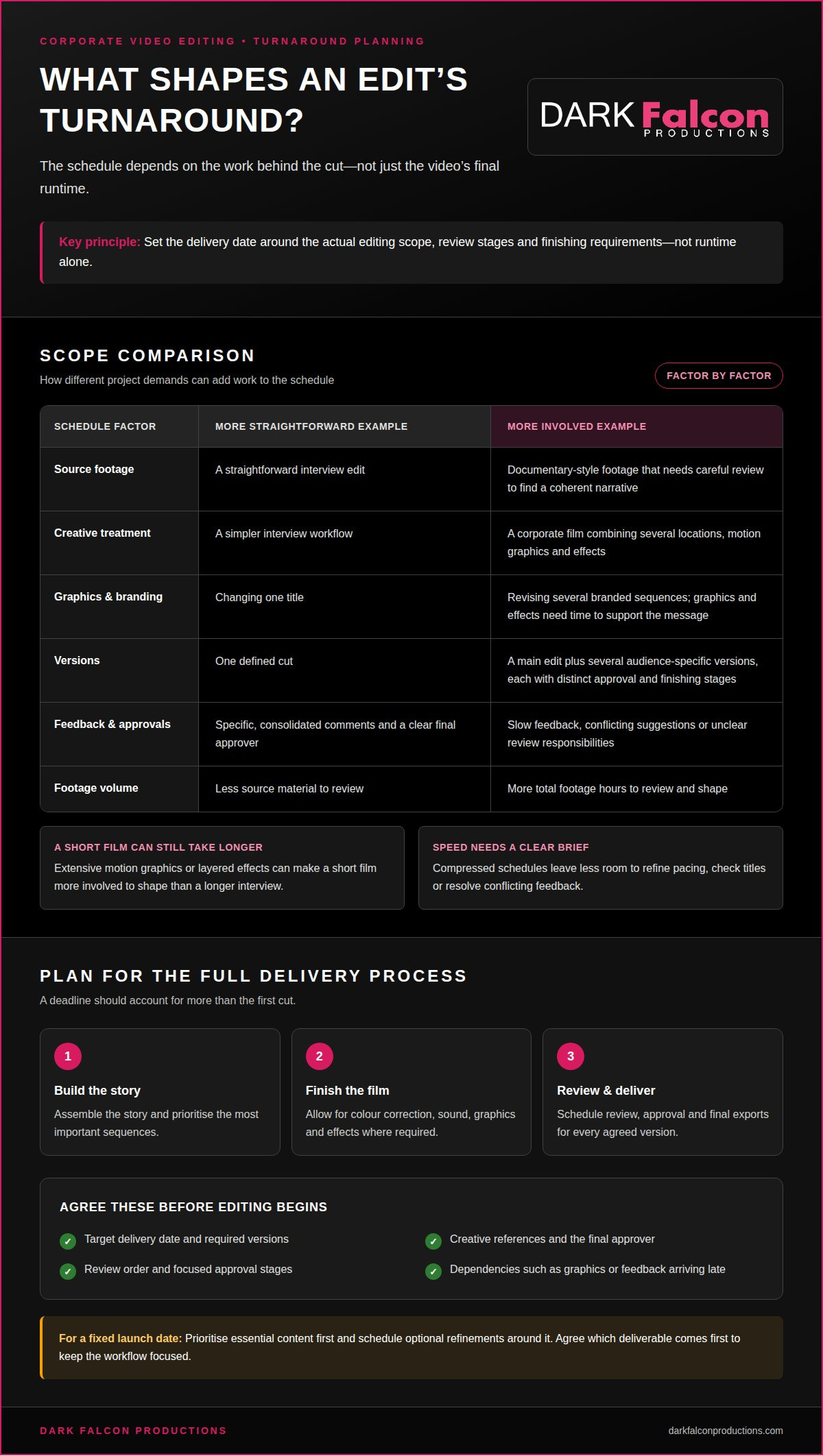
Turnaround depends on total footage hours, the number of versions, graphics complexity and feedback speed. Changing one title is different from revising several branded sequences. Set the review order and final approver early, then keep each approval round focused on the agreed brief.
Turnaround times for corporate video editing
Corporate editing schedules depend on the source material, creative treatment and approval process. A straightforward interview edit follows a different workflow from a corporate film combining several locations, motion graphics and effects. Set the delivery date according to the actual editing scope, not the final runtime alone.
The main factors are total footage hours, the number of versions, graphics complexity and feedback speed. A short film can take longer to shape than a longer interview if it uses extensive motion graphics or layered effects. Documentary-style footage may also need careful review to find a coherent narrative. Clear priorities help the editor focus time on the most important sequences.
For video production teams, the deadline should cover more than the first cut. It also needs to account for assembling the story, colour correction, sound, graphics, review and final exports. A corporate film with a main edit and several audience-specific versions, for example, needs distinct approval and finishing stages. Agreeing which deliverable comes first helps keep the workflow focused.
Choosing an editor solely for speed can create risks if the brief, review stages or finishing requirements are unclear. Compressed schedules can leave less room to refine pacing, check titles or resolve conflicting feedback. Motion graphics and effects also need time to support the message rather than distract from it. A defined scope and one consolidated set of comments make urgent work more manageable.
Before editing starts, establish the target delivery date, required versions, creative references and approver. This gives the editor a practical basis for planning each stage and identifying dependencies, such as late graphics or delayed feedback. For a corporate film with a fixed launch date, prioritise essential content first and schedule optional refinements around it.
For a considered approach to corporate video production, align the creative ambition with the deadline and review process from the start.
Cloud-based footage uploads and feedback
A shared cloud workspace gives the editor and production team one organised place for footage, project files and review notes. Grouping material by filming day, interview or scene makes it easier to find the right take. Folders labelled “interviews”, “office footage” and “approved music”, for example, separate source material from assets ready to use.
Before editing begins, the team can agree a folder structure and file-naming pattern. Names such as “CEO_interview_take_02” tell the video editor what a clip contains without opening each file. A brief can identify the priority stories, preferred formats and any shots that must stay out of the cut. This context helps the editor start with the intended narrative.
Large footage uploads may take time, depending on file size and connection speed. The team can prioritise essential interviews and key scenes first, then add supporting shots as they arrive. That gives the editor a starting point for building the story while the remaining material uploads. If a file is incomplete or difficult to identify, the editor can flag the issue before it affects the sequence.
For review, a cloud workspace can hold each cut alongside comments tied to specific moments. A note such as “use the close-up here” gives clearer direction than feedback detached from the footage. Keeping approved versions separate from new cuts reduces confusion when several stakeholders review the same project. One consolidated feedback document can also help resolve conflicting suggestions.
Match access to each person’s role: the production team may organise source footage, while approvers focus on story and messaging. Keep final exports separate from working files, and label versions by purpose, such as a presentation edit or social format. This simple structure makes the right deliverable easier to find and keeps reviews moving.
Social media teasers and short-form edits
A social teaser should give viewers a reason to watch, not simply compress a longer film. For a product launch, an editor might build one short edit around a striking reveal, then create another around a customer reaction. Each version can tell a complete mini-story while pointing to the wider campaign.
Start with the platform and audience. A vertical sequence may suit mobile viewing, while a landscape cut can preserve detail from a corporate film. The editor can select the strongest opening moment, remove pauses and shape the pacing around the message. An event recap, for example, could open with a speaker’s key line, then move through audience reactions to a clear closing frame.
Graphics should support the story, not compete with it. A product teaser might use concise on-screen wording to identify a feature, alongside brand colours and a consistent end card. Captions can help communicate dialogue when viewers watch without sound. The editor also balances music, speech and effects to keep the message clear in the final video.
Plan each cut as a distinct asset. A campaign brief can map the main film to its teaser, alternate opening and platform-specific formats. This gives the editor a clear order of priority and helps the team review each version against its purpose. Keep the visual language consistent, but adapt framing and pacing to suit how each platform is used.
For faster delivery, select the source moments and campaign message before editing begins. One approved line, product shot or event highlight gives the editor a firm creative anchor. Focusing the review on that purpose can prevent requests from pulling the teaser away from its role. The result should feel complete on its own while still belonging to the wider brand story.
Plan your short-form campaign around the stories and formats your audience needs.
Dark Falcon Productions: Video Editing
Dark Falcon Productions shapes supplied footage into considered edits for campaigns, corporate films and social channels. Turn to its video editing services when your team needs a clear narrative, polished finishing or short-form cuts built around one production brief.
Creative direction connects the edit to its purpose, while Shorts can bring key moments to social formats. For teams planning ongoing content, social media management can support the wider publishing workflow. The right scope depends on the footage, intended audience and deliverables, so a focused brief gives the work a strong starting point.
To discuss your project and its editing needs, contact Dark Falcon Productions.
Make your next edit work harder
Fast turnaround video editing in the UK works best when the finished piece has a clear role beyond meeting a deadline. Treat each edit as part of a wider creative plan: decide how the main film can support future campaign moments, audience conversations and consistent publishing. This helps your team brief the work with purpose instead of treating every cut as a one-off deliverable.
Dark Falcon Productions brings together Creative, Shorts and social media management, giving businesses options for developing video content and its role in a broader channel strategy. Whether you’re planning a focused short-form piece or shaping upcoming content, a clear conversation can turn an immediate editing need into a considered next step.
Contact Dark Falcon Productions to discuss your project and take the next step with confidence.
Frequently Asked Questions
How much does it cost?
The cost depends on the editing scope and is provided after a quote request. The quote reflects factors such as footage volume, the number of finished versions, graphics, audio finishing and the deadline. A single interview edit has different production needs from a campaign with several cut-downs. Set out the intended deliverables and finishing requirements so the quote reflects the project.
How fast can you turn an edit around?
The delivery date depends on the project brief, footage and approval process. A focused edit with an agreed story and supplied assets follows a different workflow from a campaign requiring several stakeholders to review versions. The schedule also needs to account for final exports and requested changes. Share the launch date and essential deliverables at the start so the production plan reflects what must be ready first.
How long does an edit take?
Editing time is the production work required to turn raw footage into a finished piece, not simply the final video’s running time. A concise film may involve reviewing extensive material, choosing the strongest moments, shaping a story and refining sound and visuals. For example, an interview-led piece may need careful selection of answers before its structure becomes clear. Review and approval stages also form part of the overall schedule.
Need an edit turned around quickly?
For an urgent edit, provide a clear brief with the deadline, intended audience and essential deliverables. Include the source footage and approved brand assets, plus a reference that conveys the desired tone. If the project has several versions, identify the most important output. These details give the editor a practical basis for prioritising the work and aligning creative decisions with the launch objective.
What are professional video editing UK services?
Professional video editing transforms recorded footage into finished content for a defined purpose. It can include selecting takes, building a coherent sequence, refining colour and sound, adding captions or graphics, and preparing versions for different uses. For example, a business can turn an interview into a complete brand film and supporting short-form content. The exact scope follows the brief and intended audience.
Which formats and ratios can you deliver?
Delivery formats and aspect ratios depend on the destination and project brief. A landscape version can suit a presentation, while square or vertical framing may fit a social placement. The editor needs to know where each version will appear and whether the footage supports the requested framing. Agreeing on these requirements before finishing helps ensure each export is prepared for its intended use.