
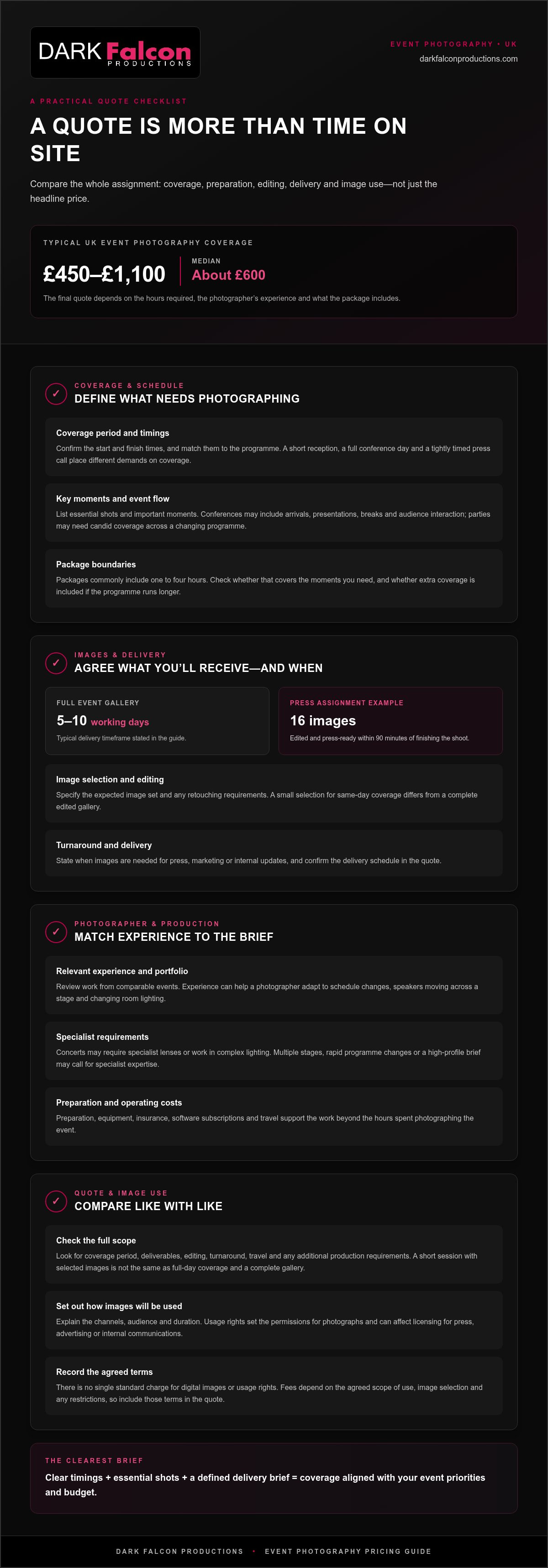
The headline price is only part of the picture. For the average cost of event photography in the UK, a current market comparison puts typical coverage between £450 and £1,100, with a median of about £600. The final quote depends on the hours required, the photographer’s experience and what’s included in the package.
It’s understandable to want a clear figure before committing to an event budget. But a short reception, a full conference day and a tightly timed press call place very different demands on a photographer, so the price reflects more than the hours spent taking pictures.
This guide explains what shapes event photography prices, how coverage length and experience affect the total, and where extra costs can arise. You’ll also learn how to match coverage to your programme and manage the budget without losing sight of the images your event needs.
Key Takeaways
- Compare quotes by what they cover, including planning, editing, travel and image delivery, not just the hours on site.
- Match coverage to the event programme: a focused half-day can suit a shorter schedule, while a full day captures more of the event’s story.
- Experience, specialist requirements and regional demand can all shape the fee, so weigh the photographer’s fit against your brief.
- Set priorities before booking and allow room in your budget for overtime or additional requests.
- Clear timings, essential shot requirements and a defined delivery brief can help keep coverage aligned with your budget.
How much does an event photographer cost?
The average cost of event photography in the UK depends on the assignment’s scope and intended use. Coverage hours matter, but preparation, specialist equipment, editing and image delivery also influence the quote.
Editing and image delivery
Editing involves selecting and refining photographs after an event; turnaround is the time it takes to deliver them. Both affect when your images are ready for press, marketing or internal updates.
A full event gallery typically takes five to ten working days to deliver. A press assignment may need selected images much sooner: one case study delivered 16 edited, press-ready photographs within 90 minutes of finishing the shoot.
Set priorities in your brief. A conference needing a small set of images for same-day coverage is different from one requiring a complete edited gallery. The number of selected images, retouching requirements and delivery schedule all affect post-production work.
Prices across event types
Event photography prices vary by event type because schedules, settings and image requirements differ. A corporate event may prioritise speakers and networking, while a party may call for candid moments across a changing programme.
Conferences can include several stages, from arrivals and presentations to breaks and audience interaction. A clear schedule helps define the coverage needed. Concerts may require specialist lenses or work in complex lighting, while a private celebration might need a more compact brief.
Wedding photography is a separate market comparison. Bridebook’s UK Wedding Report for 2026 puts average wedding photography spend at £1,484. Wedding costs can reflect the length of coverage, travel, planning, editing and whether the day spans multiple locations.
Photographers also account for business costs, such as equipment depreciation, insurance, software subscriptions and travel. These operating expenses support the work beyond the hours spent photographing the event.
Comparing quotes, images and usage rights
A useful quote sets out the coverage period, deliverables, editing, turnaround, travel and any additional production requirements. Compare like with like: a short session with selected images is not equivalent to full-day coverage and a complete gallery.
Explain how you plan to use the digital images, including the channels, audience and duration. Usage rights describe the permissions attached to photographs and can affect how images are licensed for press, advertising or internal communications.
There’s no single standard charge for digital images or usage rights across all assignments. Fees depend on the agreed scope of use, image selection and any restrictions. Include those terms in the quote so the final delivery fits your publishing plans.
Prices by photographer experience and package
Experience and package design influence a quote because they affect preparation, coverage decisions and the final images. Compare what each option delivers rather than treating the photographer’s time on site as the whole assignment.
Experience and service level
An experienced photographer can respond to changing event conditions. A conference schedule may shift, a speaker may move across the stage, or the room’s lighting may change between presentations. The ability to adapt quickly helps maintain consistent coverage through those moments.
Experience also shapes planning and service. A corporate photography specialist with at least ten years’ experience brings a different level of expertise from a student photographer. More experience can mean stronger preparation, confident handling of technical demands and a more deliberate approach to selecting images. These capabilities matter most when the event has a tight schedule or important communications needs.
Reputation and portfolio can also influence fees. A photographer with a strong record of similar assignments can show how they handle keynote speakers, audience interaction or low-light performances. Review images from comparable events and assess whether the style and coverage match your brief. A recognised name alone doesn’t show whether the work suits your audience.
Packages and the value of experience
Packages commonly include one to four hours of photography. This can suit a focused engagement, such as arrivals and opening remarks, but may not cover a full programme with several sessions and networking. Specify the moments that matter so the package reflects the event’s actual schedule.
At that level, a package may reflect complex production needs, specialist expertise or a high-profile brief. Compare the scope carefully: weigh the fee against coverage, planning, image selection and delivery requirements, not the “premium” label alone.
Experience is especially valuable when there’s little room to miss a moment. A photographer must anticipate where key interactions will happen and work efficiently around guests, speakers and venue constraints. For a straightforward gathering, a simpler package may suit the brief. For a conference with multiple stages or rapid programme changes, specialist experience may matter more.
Choosing a package that fits
Start with the event schedule and identify the moments that need images. Then compare package length, included preparation, editing and delivery. If coverage ends before networking or a closing address, the images may not represent the full event. If you’re shaping a brief around the programme, plan coverage around your event priorities.
Packages are most useful when their boundaries are clear. Confirm the start and finish times, the expected image set and whether additional coverage is included. This makes it easier to compare experience and service levels with what your event actually needs.
Regional price differences
The venue, travel requirements and coverage length also shape the total, so a regional average is a guide rather than a complete quote when calculating the average cost of event photography UK.
How location affects rates
Capital cities and major metropolitan areas can sit higher on the pricing scale.
These differences reflect more than the photographer’s base fee. Travel, transport and accommodation can add costs for events far from the photographer’s base. A venue outside a commercial hub may therefore affect the quote differently from an equally long assignment in a bustling metropolitan centre.
Coverage length and package ranges
Coverage time provides a practical comparison point. A half-day may suit a conference programme lasting around four hours.
Check what each package includes: the hours alone don’t tell you about planned coverage, editing or image delivery.
Season, schedule and event demands
Season can affect how much choice you have around dates. A busy period may make a particular date harder to book, while quieter dates can offer more flexibility. Evening events may also cost slightly more because some photographers charge higher fees for anti-social hours. Include the event’s start and finish times in your brief.
Complex lighting, multiple cameras or specialist lenses can increase costs, regardless of region. A conference with stage presentations and networking may need different equipment and coverage from a small indoor reception. A portfolio showing similar venues can help you judge whether the photographer’s experience suits the setting and the images you need.
Compare regional quotes by listing the location, travel needs, programme hours and delivery expectations. For example, a four-hour conference in a home counties setting and an eight-hour capital city conference require different coverage plans. Matching each quote to the same event schedule makes regional price differences easier to interpret, a standard approach utilised by Dark Falcon Productions.
Choosing half-day or full-day coverage
Choose coverage by matching the photographer’s time on site to the event programme, not simply its advertised duration. A UK package usually defines coverage hours, image delivery and editing; compare those inclusions with the start and finish times.
Hourly rates and coverage packages
Hourly pricing suits a defined part of an event, while half-day and full-day packages group coverage into broader blocks.
The fee depends on the assignment and is provided after a quote request. Key factors include hours, planning, editing, travel and delivery requirements. Compare the stated coverage period and deliverables rather than multiplying an hourly rate without checking the package terms.
Pricing for short coverage
Short coverage focuses on a specific programme window, such as guest arrivals, a keynote or a reception. Packages commonly include one to four hours of photography, making this format suitable for an event with a clear beginning and end.
For a conference programme lasting around four hours, half-day coverage may be sufficient. A two-hour corporate event, for example, could prioritise speaker portraits, audience reactions and networking. Agree on the priority moments, because a short booking leaves less flexibility if the schedule changes.
Half-day and full-day packages suit different schedules. A half-day booking can cover a compact programme, while full-day coverage may follow several sessions, breaks and evening activity. That range is a market guide, not a client-specific quote.
For a full-day booking, map the programme against the coverage window. If registration begins before the first presentation, decide whether arrivals matter as much as the closing session. This helps avoid paying for hours that miss priority moments or ending coverage before an important part of the event.
Packages may differ in editing, image selection and turnaround as well as time on site. A conference team needing images for a post-event report has different delivery needs from an organiser seeking selected images during the event. Include those requirements in your brief so the proposed package reflects the intended use.
Overtime is another practical consideration. If a conference agenda includes several sessions, allow for delays between speakers and networking that runs beyond the scheduled finish. Clarify how extra coverage is handled in the quote and set a clear end time before the event.
Use the programme to guide your decision: list essential moments, note their timings, then choose the shortest coverage block that captures them. For a four-hour event, half-day coverage may align neatly; for an eight-hour schedule, full-day coverage may provide a more continuous record.
Managing event photography budgets
A clear budget starts with the images your event needs and the work required to deliver them. Separate essential coverage from optional additions, then compare quotes against the same brief.
Set priorities before requesting quotes
List the moments that must be captured, such as guest arrivals, a keynote, networking or an evening reception. Match them to the event schedule, then identify a coverage window that includes them. A photographer’s work also includes preparation and post-production, so a short time on site doesn’t represent the entire assignment.
Build your brief around practical requirements: venue, timings, key people, intended image use and delivery deadline. A conference team needing photographs for a next-day report, for example, has different priorities from an organiser building a long-term image library. A focused brief keeps proposals aligned.
Allow for changes and extra requests
Set aside a 10-15% contingency for overtime or additional requests. This can accommodate a delayed programme or an extra group photograph without displacing essential coverage. Keep the reserve separate from the planned fee, and decide who can approve changes during the event.
Ask for the quote to describe coverage, editing, delivery, travel and any additional production requirements. Check the booking payment and cancellation terms, too. Clear terms explain when payments are due and how schedule changes affect the agreement.
Plan a wedding photography budget
Wedding photography budgeting benefits from accounting for work beyond the wedding day. One photographer estimates that a full-day wedding assignment takes 38-52 hours in total, including shooting and related work. That wider workload helps explain why comparing providers only by the hours spent photographing can give an incomplete picture.
Photographers suggest setting aside 10-15% of the total wedding cost for photography. Decide which moments matter most, such as the ceremony, speeches or evening celebrations. Then align coverage with those priorities. Prints, albums, additional photographers and multiple locations can change the scope, so include them only where they serve the plan. For an example of how joint coverage and full-day packages are offered in practice, visit sephotography.co.uk.
Keep the budget connected to the brief
If a proposal exceeds your budget, refine the scope before removing core requirements. You could shorten coverage around non-essential periods, reduce optional deliverables or prioritise a smaller set of images. A corporate event, for example, may need keynote and networking photographs more than continuous coverage of every break.
Use the same brief when comparing proposals, and assess the complete delivery rather than one headline figure. For a carefully scoped event photography plan, discuss your event coverage requirements.
Dark Falcon Productions: Creative
Dark Falcon Productions provides event photography for organisations that need a considered visual record of their event. Coverage can be shaped around key moments, audience interactions and the images you need afterwards.
Bring your programme, priority shots and intended image use into the conversation. A clear brief helps align photography with the event’s purpose, whether you’re documenting a conference, company gathering or public occasion. If you need more than still images, Shorts and social media management can support how event content is presented and shared.
For a tailored discussion about event photography and your coverage requirements, contact Dark Falcon Productions.
Shape the next step for your event
Event images can continue working long after guests have left. Think about where they’ll appear, who needs to use them and what story they should tell. That wider purpose helps you brief photography with intention, rather than treating the images as a record alone.
Dark Falcon Productions can connect event coverage with creative development, Shorts and social media management, helping you consider how event content fits your communications. Once you understand the average cost of event photography in the UK, define the outcome you want the images to support and align your brief with that goal.
Share your event plans and priorities with Dark Falcon Productions to discuss a considered approach. Contact Dark Falcon Productions and take the next step towards visual content that serves your event’s purpose.
Frequently Asked Questions
Are travel costs included?
Travel costs depend on the photographer’s quote and journey. Some photographers may add expenses for trips beyond 25-35 miles from their base, while assignments requiring substantial travel can involve transport or accommodation costs. For example, an event at a remote venue may require overnight accommodation. Include the venue address in your brief and compare how each quote treats travel, rather than assuming it’s included.
Do conference photographers charge hourly?
Yes, conference photographers can charge hourly, though many also offer half-day or full-day packages. Hourly pricing can suit a single keynote or networking session, while a package may fit a schedule with several stages. Compare the booked hours with the event timetable, including setup or breaks that need photographic coverage.
Does paying more mean better quality?
No, a higher fee alone doesn’t establish that a photographer’s work is better suited to your event. Compare examples from similar settings, such as a conference stage, evening reception or dimly lit performance. Look for consistent framing and images that suit your intended use, then assess the quote’s coverage and deliverables. A well-matched portfolio and clear scope offer more useful evidence than price alone.
Is experience really worth paying that much more for?
Experience can be valuable when an assignment involves complex lighting, a tight programme or moments that cannot be repeated. A photographer who has covered similar events can anticipate where key interactions happen and adapt to schedule changes. Those demands may be lower for a straightforward gathering. Compare relevant event examples and the proposed coverage plan to judge whether specialist experience fits your brief.
What is the average cost of an event photographer in the UK?
A separate market comparison of event photography coverage places typical offers between £450 and £1,100, with a median of about £600. These figures represent different price summaries, so check what each quote covers before using one as your budget. Event duration, editing, travel and delivery requirements all affect the cost of a specific assignment.
What are typical UK event photography rates per hour?
These hourly figures are useful for estimating focused coverage, but they don’t describe every package or deliverable. For a conference, compare the photographer’s booked hours with the sessions, audience moments and networking that need to be captured.
How much does event photography cost for a half day or full day in the UK?
These market ranges vary by package and assignment. Match the booked period to the programme so coverage includes the moments your organisation needs documented.
What extra fees may apply, such as travel, overtime, editing, or fast delivery?
Possible additions include travel expenses, extra coverage time, complex lighting, multiple cameras, specialist lenses and rapid image delivery. Editing and retouching requirements can also affect the final quote. Selecting press-ready photographs for immediate use, for example, creates a different post-production brief from delivering a standard gallery. Ask for each requirement to be itemised, including overtime arrangements and the agreed image delivery schedule.