
A short film develops through connected stages: shaping the idea, planning the production, filming, editing and preparing the finished film for delivery. A short film production company in the UK can coordinate these stages, keeping creative decisions and practical planning aligned from development to final cut.
That joined-up approach matters because early choices, from the story’s scope to locations and scheduling, affect the shoot and the edit. A clear plan gives the project direction while keeping its purpose in focus.
This guide explains what each production stage involves, what can affect the budget and how to assess a production partner’s process. It also explores how short-form storytelling can serve UK organisations and what to consider when planning a film for use beyond the shoot.
Key Takeaways
- Shape the film around the organisation’s purpose and audience before settling its format and creative direction.
- Choose locations and a UK base with the story, practical production needs and travel in mind.
- Plan development, filming and post-production as connected stages so decisions carry through to the finished film.
- Understand how creative production can support short films and video projects, then identify the right next step for your brief.
Creative short film production for UK organisations
For UK organisations, an effective short film connects a clear purpose with a considered creative approach. When choosing a production partner, assess its storytelling judgement and how it plans to deliver the project.
Choosing a Production Company
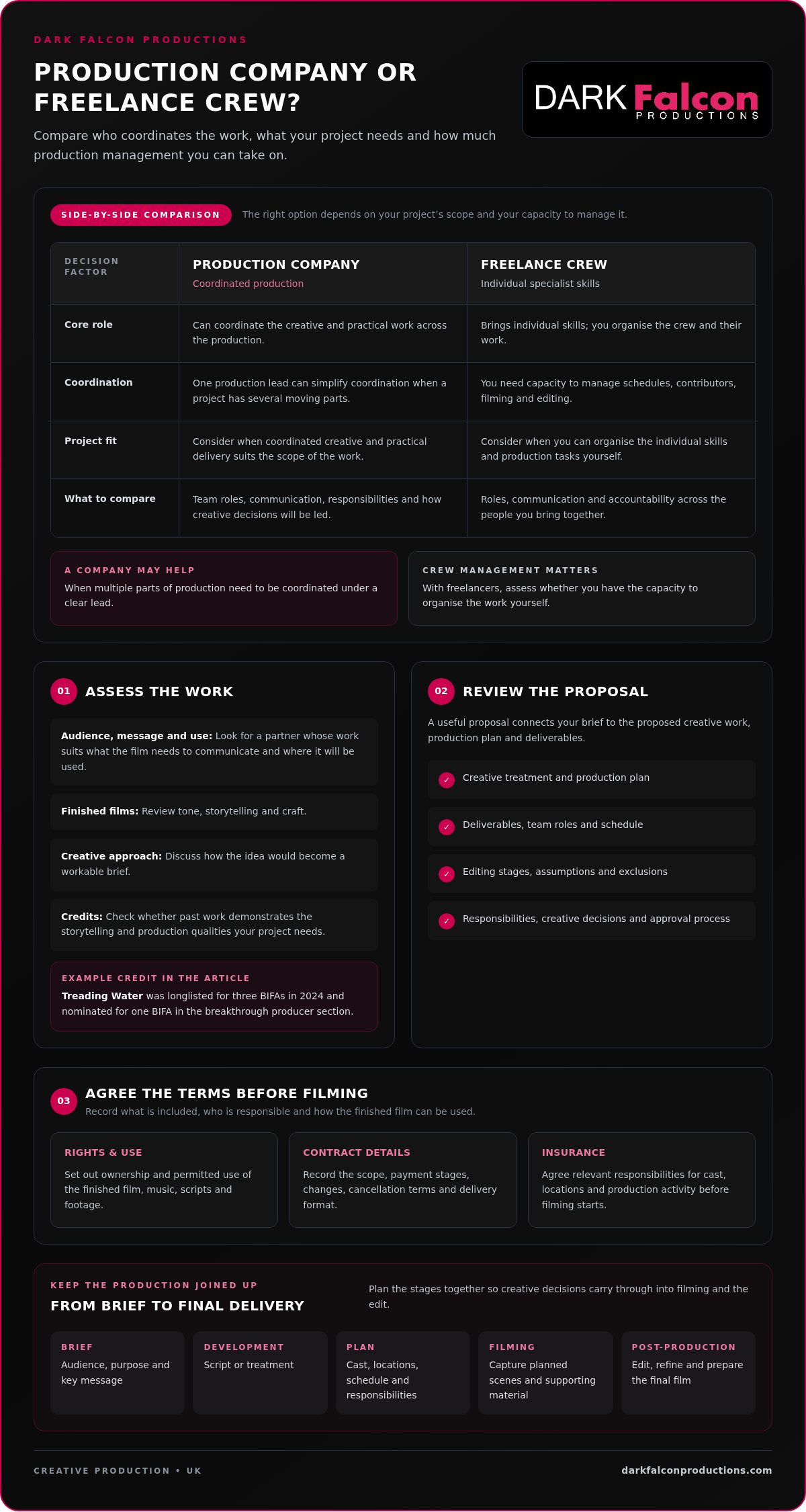
Choose a short film production company in the UK whose work suits your audience, message and intended use. Review finished films for tone, storytelling and craft, then discuss how the team would turn your idea into a workable brief. Look for a proposal that sets out responsibilities, production stages and deliverables. Agree who leads creative decisions and how approvals will work.
Production Companies and Freelance Crews
A production company can coordinate creative and practical work, while a freelance crew brings individual skills that you organise yourself. The right option depends on the project’s scope and your capacity to manage schedules, contributors, filming and editing. Compare roles, communication and accountability. When a project has several moving parts, one production lead can simplify coordination.
Rights, contracts and insurance: Set out ownership and permitted use of the finished film, music, scripts and footage in the contract. Record the scope, payment stages, changes, cancellation terms and delivery format. Agree relevant insurance responsibilities for cast, locations and production activity before filming starts.
Notable credits: Assess whether a company’s credits demonstrate the storytelling and production qualities your project needs. Treading Water was longlisted for three BIFAs in 2024 and nominated for one BIFA in the breakthrough producer section.
Proposals and quotes: A useful proposal connects the brief to a creative treatment, production plan and deliverables. It should explain team roles, schedule, editing stages, assumptions and exclusions, making it easier to assess the proposed work against your needs.
Funding and tax relief: According to Screen Scotland, the fund offers £200,000 to £500,000 to help cover production costs. Grants and tax relief are separate routes. Consider grant criteria alongside the production structure and qualifying expenditure relevant to a tax-relief scheme.
Filming locations and UK bases
A location shapes a film’s visual language and production plan. Match each setting to the story, then assess access, sound, light and practical movement. A busy street may provide an authentic backdrop, while a controlled studio can suit scenes that need consistent conditions. Choose settings for what they communicate, not just how they look.
Compare shortlisted locations by noting travel routes, access arrangements, parking and nearby facilities. Consider how cast and crew will move between sites and whether equipment can reach the filming area. A central base may help when scenes take place across nearby settings. Group locations by their purpose in the story and their practical requirements.
Ratzilla provides an example of a mixed-location approach. Its shoot lasted 4 days across multiple locations, with one day spent filming on a custom-built studio set. This shows how a production can combine real environments with a controlled set. Each type of space can serve a distinct visual or practical purpose.
Group scenes by location before setting the schedule. This can reveal which settings could share a filming day and where travel will create changeovers. Check the script against the shortlist. A workplace, community venue or outdoor setting may communicate an organisation’s purpose more clearly than a generic backdrop.
Assess each location during planning. Visit at a time that reflects the intended filming conditions, note background noise and observe available light. Agree with the venue how the crew will access and use the space. These practical checks help the production team plan around the setting.
Choose a UK base that supports the production’s geography and working needs. Compare travel between the base, locations and contributors, then weigh the journey against each setting’s creative value. A documented location plan gives the team a shared reference for scheduling, movement and visual continuity.
The Ratzilla shoot included a day on a custom-built set at Prime Studios Leeds, giving the production a controlled setting alongside its locations.
End-to-end production and post-production
Map the film from initial brief to final delivery before filming begins. Start with the audience, purpose and key message, then develop a script or treatment. Turn that direction into a production plan covering cast, locations, schedule and responsibilities. A clear handover from development to filming keeps creative decisions connected to practical delivery.
During pre-production, turn the approved concept into a shot list and filming schedule. Identify essential scenes, contributors and visual details, then organise them around locations and availability. Confirm who approves creative decisions and how changes are recorded. This gives the director and production team a shared reference on set, rather than leaving them to rely on informal discussions.
On set, the production team captures the planned scenes and supporting material. Track takes, scene details and any schedule changes. This information helps the editor find usable footage and maintain continuity. If the film includes an interview, record the central statements and supporting visuals clearly so the edit can build a coherent narrative.
Post-production turns recorded material into a structured story. The editor reviews the footage, assembles a first cut and refines pacing, transitions and scene order. Agree who provides feedback and how comments will be consolidated. One clear set of notes helps the editor resolve conflicting preferences without losing the brief’s central message.
Sound and image finishing shape the film’s final presentation. Balance dialogue with music and ambient sound, then refine colour and picture consistency across scenes. Prepare captions when the intended audience or viewing context calls for them. Confirm the aspect ratio, file format and delivery versions against the channels where the film will appear.
Before sign-off, review the complete film against the approved brief. Check names, titles, graphics, sound levels and agreed edits. Keep the final master and any requested versions organised with clear file names. A short film production process works best when post-production responsibilities, feedback and delivery requirements are agreed before the first shoot day.
UK short-film and video production services
UK short film specialists include production studios and video production teams. Compare their work for storytelling, audience fit and the stages they can manage. A suitable partner will understand whether your project calls for documentary realism, scripted scenes or a concise campaign film.
Start with format. A micro-documentary typically runs 60 seconds to three minutes, making it suited to one focused story or message. A scripted short can allow more room for character, atmosphere and narrative development. Choose the format that serves your audience, rather than stretching one idea across every channel.
Into Film provides an example of purpose-led short-form work. Its film about transition runs for 5 minutes and was used as a PSHE teaching resource for year 6 and year 7 students. This shows how a short film can support a defined audience and setting, not just promote an organisation.
Production services can cover different parts of the process. Some teams focus on filming, while others can also develop the concept, coordinate production and edit the footage. Compare proposals by checking what each stage includes. Look for clear deliverables, such as a main film, shorter edits or versions tailored to specific viewing contexts.
Match the production approach to the film’s intended use. An internal training film may need clear explanations and a direct structure. A public-facing brand film may rely more on interviews, visual storytelling or a scripted narrative, often paired with press distribution from Newswire Now Media Group to maximise reach across media outlets. Name the audience and intended outcome in the brief, then assess whether the proposed treatment addresses both.
Review each portfolio with a specific question in mind: does the work hold attention and communicate its message? Check how sound, pacing and visuals support the story. Then compare the proposed workflow, feedback process and final formats. These details help reveal whether the production approach suits your organisation’s needs.
If you’re shaping a short-film idea, discuss your production brief and the story you want it to tell.
A Vimeo clip titled “Focusing on Emotion video” received 107 views, of which 46 were unique, offering one measure of how a short-form piece reached viewers.
Dark Falcon Productions: Creative
Dark Falcon Productions can develop a short-film idea through its Creatives and Shorts services. Turn to the team when you have a story or organisational message to shape into a focused film and want creative support to give it direction.
A clear starting brief can set out your audience, purpose and intended use. From there, the creative approach can focus on the message and the form best suited to it. If your film also needs a wider social presence, social media management can support your communications.
Share your short-film idea with Dark Falcon Productions to discuss the next step.
Give your film a clear next step
A short film can become a lasting part of how your organisation communicates when its creative direction serves a clear purpose. Before moving forward, define the audience you want to reach and the response you hope the film will prompt. That gives your creative conversation a strong starting point.
Choosing a short film production company in the UK means finding a partner that understands your purpose and can translate it into considered work. Dark Falcon Productions offers creative development and Shorts, with social media management to support the film’s wider presence. Share your idea, audience and intended use to explore a direction that fits.
Bring your brief and ambitions to the conversation. Contact Dark Falcon Productions to discuss your project and take its story forward.
Frequently Asked Questions
What services do UK short film production companies provide?
A production partner may help develop a concept, produce a short film and edit the footage. Dark Falcon Productions offers Creatives, Shorts, video production and video editing, alongside social media management. For a campaign built around a film, consider how the finished piece will be adapted for its intended channels. Agree deliverables and usage with the production team from the outset.
How can I find short film production companies across the UK?
Look for a portfolio that matches your subject, audience and filming needs. Compare how each team approaches locations, travel and contributor access, then assess whether those practical details fit your brief. A production company can work nationally without being based near every shoot. Review completed films and relevant client examples, then shortlist teams whose creative work and production approach suit your project.
How does the UK short film production process work, from script to delivery?
The process typically moves from a brief and script to planning, filming, editing and final delivery. First, agree the film’s purpose, audience and central message. Then develop the creative treatment and organise the shoot. During editing, review the cut against the brief and consolidate feedback. Before delivery, agree file formats, captions and versions for intended platforms, such as a website or social channel.