
A short film’s colour grade depends on its footage and intended look, not just its running time. The cost of colour grading services for short films is shaped by factors such as footage volume, grading complexity and turnaround. The project scope is established through a quote request, so include grading in your production planning rather than treating it as an afterthought.
It’s natural to want a clear budget before post-production begins. A straightforward correction and a carefully crafted, highly specific look require different amounts of time and skill. Footage filmed across changing locations or lighting conditions may also need careful work to create a consistent visual flow.
This guide explains how basic, intermediate and high-end projects differ, what can affect the final cost, and how colour correction, monitor calibration and colour theory contribute to a considered result. You’ll also learn what to prepare for an efficient grading process and how the grade can support a short film’s story.
Key Takeaways
- Estimate grading costs by considering the footage, creative ambition, colourist experience and turnaround you need.
- Distinguish a straightforward correction from a more involved grade to set a realistic project scope.
- Plan for consistency across scenes filmed in different locations or lighting conditions, while keeping the film’s visual story in focus.
- Choose a colourist whose approach, workflow and deliverables align with your short film’s creative direction.
Pricing: How Much Does Colour Grading Cost?
For short-form work, a quote depends on footage volume, grading complexity, review rounds and delivery requirements. These factors define the project’s scope and price.
Grading across content formats
Film and video grading can balance exposure, contrast and colour across shots. Television and social content may need different versions for their intended screens. For example, a short film with interior and exterior scenes needs visual continuity between those environments. Discuss the master format, intended platforms and required exports so the quote covers each deliverable.
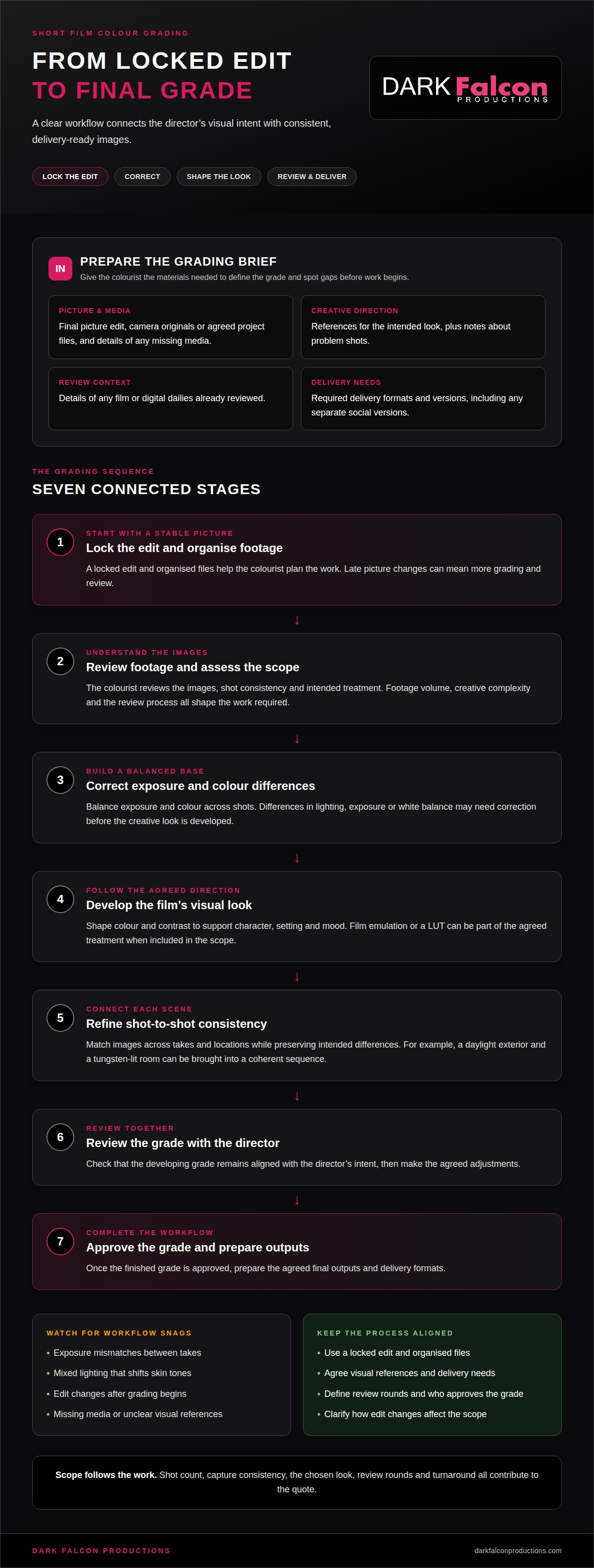
To brief the colourist, provide the final picture edit, camera originals or agreed project files, references for the intended look, and notes about problem shots. Include the required delivery formats and details of any film or digital dailies already reviewed. These materials help define the grade and identify missing media before work begins.
Short-film grading requires close attention to the story as well as shot matching. Film emulation can shape contrast and colour to evoke a chosen film-stock character. A LUT, or look-up table, applies a defined colour transformation within the workflow. Film and digital dailies let the production review footage during shooting, helping establish a visual direction before the final grade.
Common problems include exposure mismatches between takes, mixed lighting that shifts skin tones, and edits that change after grading begins. Missing media and unclear visual references can also slow decisions. A locked edit, organised files and agreed references help avoid these workflow snags.
Checking quotes and contracts
Check that the quote defines the footage covered, deliverables, review rounds, revision process and turnaround. Confirm whether it includes film emulation, LUT creation, dailies work, conforming or separate social versions. The agreement should also explain how edit changes affect the scope, who approves the final grade, and how finished files will be supplied. Clear terms make expectations and costs easier to track.
Basic, intermediate and high-end project estimates
Grading estimates reflect the work required, not simply a short film’s running time. Footage volume, shot consistency, creative direction, colourist experience and turnaround all shape the scope and price set out in the quote.
A basic project usually focuses on correcting exposure, white balance and contrast, then matching similar shots. For example, a dialogue scene filmed under consistent lighting may need fewer creative adjustments than footage captured in changing conditions. The estimate can increase with more shots, difficult exposure differences or extra review rounds.
Intermediate projects combine correction with a more deliberate visual treatment. A colourist may balance several locations, refine skin tones and build a controlled palette across the film. For instance, footage combining daylight and tungsten-lit scenes needs careful shot matching before the chosen look can work consistently across each sequence.
High-end work involves more detailed creative development and technical review. A specific film emulation, custom LUT, complex visual-effects integration or precise scene-by-scene treatment adds time and skill. A faster turnaround can also increase the price.
These bands are useful for planning, not fixed tariffs. A straightforward short film may still require intensive work if its footage varies widely, while a longer edit with consistent images may need a simpler approach. Include grading in the production budget early, alongside editing and delivery costs.
Grading time depends on the number of shots, how consistently they were captured, the complexity of the chosen look and the review process. A locked edit and clear visual references help the colourist organise the work. Late picture changes can mean more grading and review.
For a project-specific estimate, define the intended look, current edit, footage format, required versions and approval process. These details let the colourist scope correction, creative grading and delivery as distinct tasks, rather than treating every project as the same package.
Colour grading for short films
A short film’s grade should make its visual choices serve the story, not distract from it. Well-planned colour grading services for short films connect each scene’s colour, contrast and lighting to the film’s emotional progression.
Short film grading service
Grading shapes the relationship between shots and establishes the film’s overall visual character. A cool, restrained palette might support a tense night sequence, while warmer tones can distinguish a memory from the present. The colourist balances creative intent with the detail captured in each image. Consider how the proposed treatment supports character, setting and mood throughout the film.
Short film grading workflow
The workflow starts with a locked edit and organised footage. The colourist reviews the images, corrects exposure and colour differences, then develops the agreed look across scenes. They refine shot-to-shot consistency, review the grade with the director, make agreed adjustments and prepare final outputs. In practice, prepare the edit and references, review the developing grade, then approve the finished version. This process helps colour grading services for short films stay aligned with the director’s intent.
Continuity matters when scenes are filmed in changing conditions. A character moving from a daylight exterior into a tungsten-lit room can appear to change colour between shots. Grading can bring those images into a coherent sequence while preserving the intended differences between locations.
Colour theory gives visual choices structure. Complementary colours can separate a subject from the background, while a limited palette can unify distinct locations. The grade should also preserve important story details, such as readable shadows and natural-looking skin, rather than applying one effect uniformly.
Consider the Flite x Turner Twins director’s cut as an example of complex source material: it combined over 100 hours of footage captured over six months in three countries. Those details show why a short film’s running time alone cannot describe the grading challenge. Variety in source footage affects the work.
The key question is whether each adjustment strengthens the film’s narrative. Review scenes in sequence, not just as isolated frames, so changes in colour support the intended arc from the opening image to the final moment.
How do I choose a colourist for a short film?
Choose a colourist whose creative judgement suits your film and whose process fits its post-production needs. Make the decision by assessing visual examples, communication and a clearly defined scope.
Start with portfolio examples that resemble your material. A dramatic interior, a daylight exterior and a night scene each demonstrate different grading skills. Look for consistent skin tones, controlled highlights and shadow detail that supports the scene rather than obscuring it. If your film uses a restrained palette, review work with similar visual intentions.
Next, consider how the colourist develops a look. A reference still, film or director’s brief can align creative decisions before detailed grading begins. For example, a muted palette calls for different contrast and saturation choices from a vivid, graphic style. Discuss how those references can carry across the film’s locations and emotional shifts.
Clarify the workflow before grading begins. Identify the picture lock, required footage and project files, review stages, feedback method and final deliverables. A late edit change can affect completed shots, so agree how revisions will be handled. Settling these practical details helps keep creative reviews focused.
Communication matters throughout the process. The colourist should explain visual choices in relation to the story, such as keeping a character’s face visible in a dark scene while maintaining the intended mood. Clear, specific feedback makes it easier to refine the image without losing the film’s direction.
- Portfolio: assess examples relevant to your film’s lighting and visual style.
- Creative approach: discuss how references will guide the grade.
- Workflow: align on edit status, reviews and deliverables.
- Feedback: use scene-based notes that describe the intended result.
For a short film with a defined visual direction, develop your film’s creative approach around the story, footage and intended audience.
Dark Falcon Productions: Shorts
Dark Falcon Productions supports short-film projects through its Shorts and Creative offerings, helping filmmakers develop their ideas and production direction. Turn to the team when you’re shaping a short and want creative support that considers the project as a whole, from its central concept to how it reaches an audience.
A clear creative brief can establish the film’s purpose, tone and intended viewers. These decisions give the production team useful context for choices throughout the project, including how the finished work should feel and where it will be shared. For projects aimed at social audiences, social media management can support the film’s wider presence.
To discuss your short-film project and its creative direction, contact Dark Falcon Productions.
Shape the next stage of your short film
A finished grade is one part of a film’s creative identity. Consider how the project should connect with its audience, from the first impression to its presentation across channels. That direction can guide choices about the film’s story and public presence.
Dark Falcon Productions brings together Shorts and Creative work with social media management to support a short film’s development and audience-facing presence. If you’re preparing a project, start with its central idea, intended viewers and the feeling you want the film to leave behind. These decisions give the creative process a clear focus.
For filmmakers exploring colour grading services for short films as part of a wider creative project, a conversation can help define the next steps. Contact Dark Falcon Productions to discuss your short film and its creative direction. Your film’s next chapter can begin with a clear idea and a considered plan.
Frequently Asked Questions
Can I attend the grade in person?
Yes, an in-person review can be arranged as part of a supervised grading session. You can discuss images directly with the colourist, such as whether a shadow feels too heavy or a face needs more separation from its background. If you can’t attend in person, remote review with clear, time-coded notes offers a practical way to communicate adjustments.
Can you match footage from different cameras?
Yes, grading can bring footage from different cameras closer in exposure, contrast and colour. For example, one camera may render a neutral wall cooler than another. The colourist can balance the shots while preserving differences that serve the scene, such as a deliberate shift between viewpoints. Consistent lighting and exposure during filming make images easier to align in post-production.
Can you work from a half-graded or partially edited project?
Yes, a partially graded or edited project can be assessed if its current state and intended finish are clear. Identify which scenes have been graded, what adjustments remain and whether the edit is likely to change. Replacing a shot after grading, for example, may mean revisiting the surrounding sequence to preserve visual continuity.
What does a colourist / colour grader actually do?
A colourist shapes an image’s colour and tonal balance so shots feel coherent and support the director’s intentions. They can correct unwanted colour casts, control contrast and create a chosen visual character. For example, they might keep a doorway readable in a dark scene while retaining its tense atmosphere. Their work refines the image rather than changing the film’s edit.
What formats do you deliver?
Delivery formats depend on the project’s finishing requirements and intended platforms. A film festival master, a broadcast delivery and a social media version may need different specifications or frame sizes. Set out where the film will be shown before final export, then agree the required file format, resolution, aspect ratio and audio configuration in the delivery brief.
What is the usual grading workflow?
A typical workflow starts with a technical review of the supplied timeline and media. The colourist then establishes a visual direction, balances shots, refines sequences and presents the developing grade for feedback. After making agreed changes, they complete a final quality review and export the required versions. Notes tied to specific scenes help focus revisions on creative decisions.