
Technicians can stay on standby throughout an awards ceremony to handle technical issues. Awards ceremony production services can also cover setup through breakdown, alongside staging, lighting and screen content coordinated with the running order. Costs depend on factors such as the venue, guest numbers, stage design, equipment and schedule.
An awards night brings together many moving parts, from guest arrivals to the final presentation. The production plan needs to connect creative decisions with practical delivery. Here’s what support can involve across different event styles, how staging and planning fit together, and which choices shape the production budget.
We’ll also cover how technicians support the event on the day, what to include in the running order, and how recorded or live video can extend the ceremony’s impact. Use these considerations to shape an event that feels thoughtful on stage and runs smoothly behind the scenes.
Key Takeaways
- Shape the production around the ceremony’s format and atmosphere, so each element supports the experience you want guests to have.
- Align the stage, backdrop and visual content with the event’s theme and programme.
- Build a clear running order, then use rehearsals to coordinate presenters, award moments and production cues.
- Plan your budget by separating essential production needs from creative choices that can be tailored to the event.
Production for events of different sizes and styles
An awards night might be an intimate presentation or a large-scale event, but both require careful coordination. Event production connects guest arrivals, presentations, screens and technical delivery with the event’s vision.
Production team coordination
Start with the running order and map every transition, from guest arrival to the final award. A shared schedule helps the production team coordinate presenters, content and technical cues. Assign clear responsibility at each handover, including who signals the next presentation and who manages changes on stage.
Guest experience and atmosphere
Shape the atmosphere through details guests experience directly: the welcome, room layout, stage visibility and pace between awards. Measured transitions and consistent visual details can create a composed feel, while energetic screen content and music cues can bring a livelier celebration to life. Match each choice to the audience and purpose instead of adding effects without a clear role.
Red-carpet arrivals and event screens
Plan red-carpet arrivals as a sequence: welcome guests, guide them towards the event space and keep the route clear for photographs. Decide how arrivals lead into the main programme. Event screens can show live footage during the ceremony, helping guests follow what is happening across the room. Check that screen content fits the running order and is legible from different viewing positions.
Technical setup and event management
Technical management can cover setup through breakdown, with technicians on standby during the ceremony to address issues. Before doors open, align equipment with the stage plan, screen content and programme cues. Multi-camera production can capture the ceremony for full-length and highlight edits. Identify the moments to record, such as presentations or reactions, and build those priorities into the camera plan.
Staging and set design
A stage gives the ceremony a visual centre and presenters a clear focal point. Choose a design that reflects the event’s tone, gives attendees a good view and supports each award moment. Custom stages, backdrops and set pieces can be designed around the theme and room, with creative specialists such as Softmotion offering immersive visual installations and large-format displays that make a lasting impression.
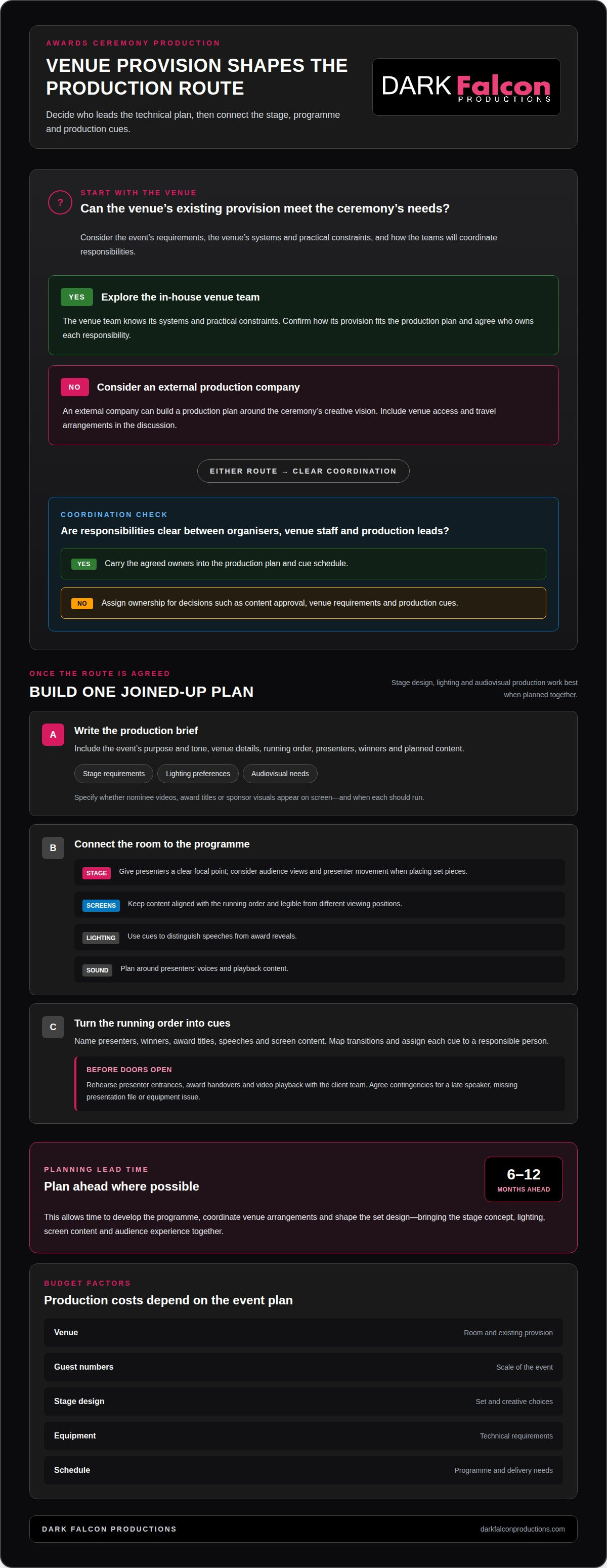
Plan awards ceremony production services six to twelve months ahead where possible. This leaves time to develop the programme, coordinate venue arrangements and shape the set design. Early decisions also help bring the stage concept, lighting, screen content and audience experience together.
Include the event’s purpose and intended tone, venue details, running order, presenters, winners and planned content in the production brief. Add stage requirements, lighting preferences and audiovisual needs. For example, specify whether nominee videos, award titles or sponsor visuals should appear on screen, and when each should run.
An in-house venue team knows the venue’s systems and practical constraints. An external production company can build a production plan around the ceremony’s creative vision. The right approach depends on the event’s needs, the venue’s existing provision and how the teams will coordinate responsibilities.
Stage design, lighting and audiovisual production work best as a joined-up plan. Position screens so attendees can follow presentations, then use lighting to distinguish speeches from award reveals. Plan sound around presenters’ voices and playback content; for events requiring dedicated audio and lighting hire, specialists such as JVG Sound Lighting & Visual Pty Ltd provide equipment packages that keep announcements and music well balanced. A considered cue sequence makes transitions feel intentional rather than interrupting the programme.
Map the process from discovery to delivery: establish the brief, develop the design, coordinate technical requirements, then prepare the production plan. Keep the audience’s view and presenters’ movement in mind when placing set pieces. For ceremonies where nominee introductions or winner stories appear on screen, event video production can shape those visuals around the programme.
Awards ceremony planning and management
Start with the programme, intended tone and venue requirements. Then assign ownership for each planning decision, from content approval to production cues.
Turnkey ceremony management
Turnkey management brings programme coordination and production planning into one workflow. When choosing a UK production company, compare its event experience, planning approach and ability to coordinate the agreed scope. Companies serve different areas, so shortlist by event location and discuss venue access and travel arrangements. For a corporate ceremony, include the venue’s requirements in the initial plan.
Running order and cue management
Build a running order that names presenters, winners, award titles, speeches and screen content. Allow time for transitions, then assign each cue to a responsible person. NHS provides a useful programme example: a ceremony announced winners in 12 categories. Add category names and award order to the brief so scripts, visuals and presentation materials stay aligned.
Technical production management
Technical production management turns the schedule into practical cues for sound, lighting, screens and playback. Before doors open, rehearse presenter entrances, award handovers and video playback with the client team. Identify risks such as a late speaker, missing presentation file or equipment issue, and agree a contingency for each. A named decision-maker helps the team respond without disrupting the programme.
Licences, permissions and safety
Permissions and safety arrangements depend on the ceremony’s activities and venue. List planned elements, such as recorded music, staging, filming or catering, then agree with the venue who handles each relevant requirement. Record access routes, stage movements, equipment positions and emergency procedures in the event plan. Keep responsibilities clear between organisers, venue staff and production leads, and brief the team before setup begins.
Award ceremony production costs
Production costs depend on the venue, guest numbers, stage design, equipment and schedule. These factors are connected: the room layout affects staging and screen requirements, while the programme influences crew time and technical setup. Start by defining the ceremony’s scale and purpose, then identify the production elements that directly support the experience.
Venue requirements shape the production plan. A room with existing screens or staging may need a different approach from a blank event space. Guest numbers also affect how well the audience can see and hear each presentation. Compare venue options against practical needs, including sightlines, stage placement and the planned arrival and award sequences.
Stage design and equipment are another key cost area. A custom backdrop, set pieces, lighting and screens each add production requirements. Separate essential elements from optional enhancements. For example, prioritise clear award titles on screen before adding decorative visuals. This keeps creative choices aligned with the ceremony’s purpose and recognises achievements without overcomplicating the set.
The schedule matters because it determines how production work is organised. A concise programme with clear transitions differs from one involving multiple room changes, extended presentations or additional playback. Share the running order and content requirements when scoping the work. This clarifies which technical elements support the programme and where adjustments could simplify delivery.
A project’s price depends on its requirements and is provided after a quote request. The main cost factors are the venue, guest numbers, stage design, equipment and schedule. To prepare, group your needs into essentials and enhancements, then note where each supports the audience experience. For instance, prioritise screens for visibility before adding extra visual effects. Discuss your event video requirements as part of shaping a production plan that makes the ceremony memorable.
Dark Falcon Productions: Creative
Dark Falcon Productions can shape the creative direction of an awards event and connect it with the content that follows. Its Events and Creative offerings suit organisers seeking a considered approach to the occasion, while Video Production and Shorts can turn selected moments into concise video content.
Social media management can help share event content with audiences beyond the room. The right combination depends on your goals: you might focus on the live experience, capture the ceremony or build a continuing social presence around its achievements. Each element should serve the event’s purpose and tone.
If you’re ready to discuss your awards event, contact Dark Falcon Productions.
Shape the next chapter of your awards event
Your ceremony can have an impact beyond a single evening. Consider how its creative direction and stories might continue after the final presentation, giving winners’ achievements a life beyond the room. Choosing awards ceremony production services is an opportunity to connect the event’s purpose with how its moments are shared.
Dark Falcon Productions offers Creative, Shorts and Social media management to carry an event’s ideas into content for wider audiences. These services can support a coherent approach, from shaping the creative concept to producing shorter content and managing its social presence. Start by defining what you want guests and audiences to remember, then align the production plan with that intention.
Contact Dark Falcon Productions to discuss your awards event and the creative direction you have in mind. A clear purpose gives the planning conversation a strong place to begin.
Frequently Asked Questions
Do you provide technicians during the event?
Dark Falcon Productions provides event production, and the event plan can set out technical roles and cue responsibilities. Assign someone to monitor playback and someone to communicate with presenters before each segment. Include those roles in the running order, along with steps for responding to a missed cue or playback issue, so the team knows what to do during the ceremony.
Can you manage winner reveals and show content?
Dark Falcon Productions offers event production and video production to support a winner reveal’s content and delivery. Prepare the winner’s name, approved visual, music or video cue, and presenter prompt as one sequence. Keep a final, clearly labelled version of each asset with the show materials so the reveal is easy to identify during rehearsals and on the event day.
Can you provide LED screens or projection for award presentations?
Screen content and display equipment are separate considerations. Video production creates presentation content, while the venue’s installed screens or projection setup determines how it appears in the room. Include the screen format, playback method and viewing position in the production plan. This helps tailor titles, nominee visuals and winner announcements to the display.
Can you provide cameras and screens for the audience?
Dark Falcon Productions offers event photography and video production to capture key moments and create event content. Cameras and audience-facing screens are separate production requirements. In a large room, plan camera positions around sightlines and specify which parts of the ceremony need close-up coverage. Decide how to use the footage, such as in a post-event highlights edit.
Do you offer custom AV solutions for unique awards ceremony themes?
Dark Falcon Productions offers Creative and event production to shape a ceremony’s visual approach around its theme. A sustainability-focused awards night, for example, might use natural colours, restrained transitions and nominee stories that reflect the event’s purpose. Define the theme, audience and key moments first, then align visuals and playback content with those choices.
What services do awards ceremony production companies provide?
Production can bring together event planning, stage and set design, lighting, sound, screen content, cue coordination and filming. The key distinction is between planning the show and supplying physical equipment. Dark Falcon Productions offers event production, video production, video editing and event photography to help organisers plan delivery and capture key moments.